How am I reading
I have always been a reader, for as far back as I can remember - from swapping Super Commander Dhruv and Parmanu comics in childhood to Substack, books, and a bunch of other materials today. The earlier days seemed benign though. It feels more like a condition now - there’s so much more content available. No more waiting for new lot to arrive at the chai-shop once you read through their entire collection of comics they used to rent. The feed now is never ending.
And it’s only getting worse, with machines joining the act now, pushing out content. And some are getting quite good beyond that generic LLM slop we have all come to hate. “warranty-void-if-regenerated” - for example by @scottwerner
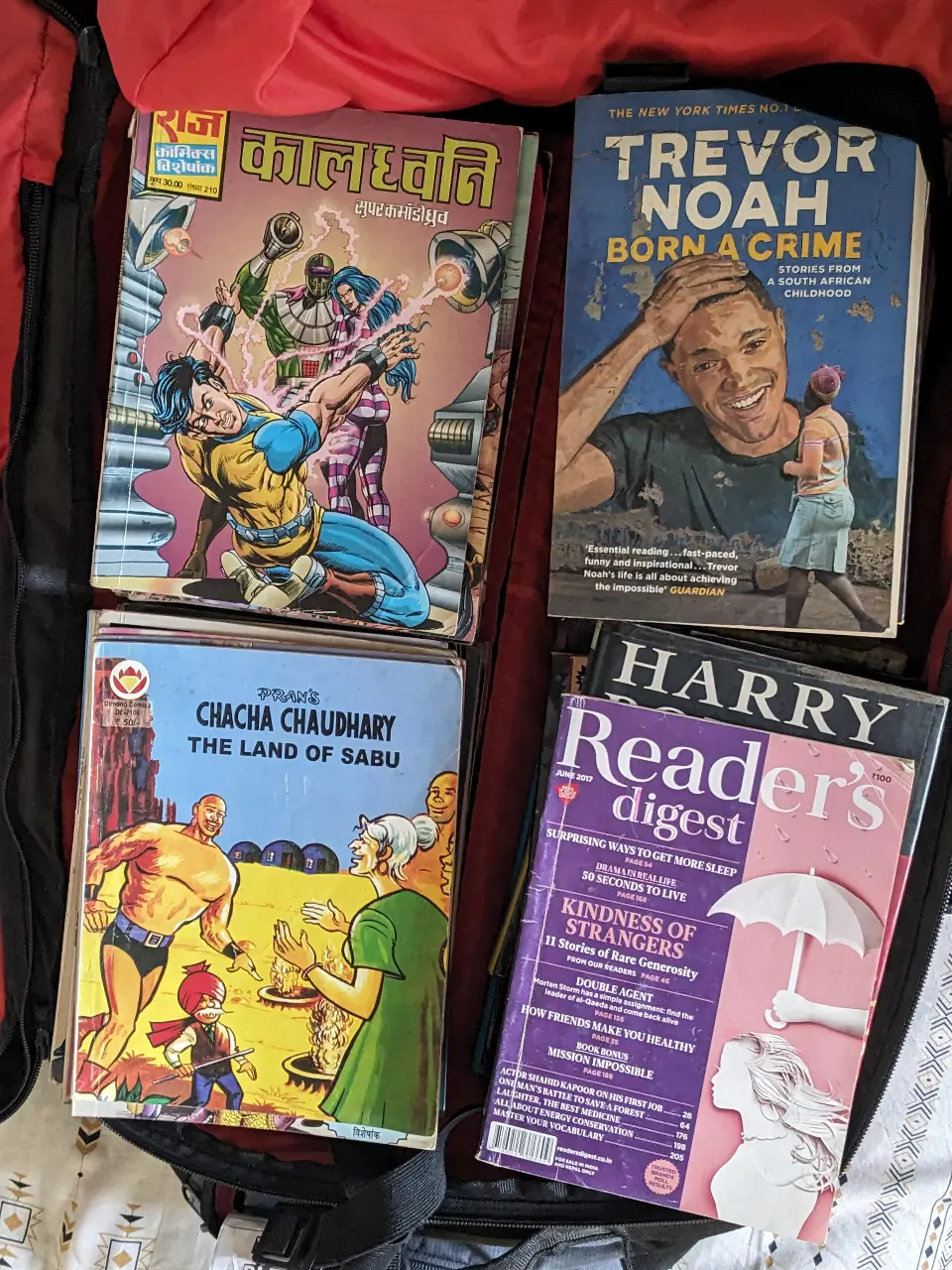
Recently got back a suitcase full of old comics and books we had got for my younger siblings...they have outgrown these now. Me, I am not sure.
But even before the machine-generated abundance of content, I was finding my reading habit getting a bit out of hand. More like an eating disorder, only for reading. I suppose we are all familiar with that consumption disorder - for some content or another: No portion control, often triggered by stress. Or other triggers. Opening news.google.com or news.ycombinator.com for the fourth time in the day, when I had just opened the PPT I was supposed to be working on. And in that sense, reading - like any other consumption habit - was becoming a blocker for me. An escape mechanism from the real stuff I needed to get done, the moment things got a little tough.
I was consuming mindlessly.
Reading mindlessly is, in fact, more insidious than mindless food consumption. Because here I often felt like I was consuming good content - staying on top of the news, reading detailed articles, learning about new technologies, or even reading good books. All stuff that was enriching me somehow.
And maybe so. But at the cost of preventing progress on my very real goals.
The six streams
I have been working on reading better. But I still keep falling back into that pattern for weeks before getting myself out of the loop. It used to be longer, so in that sense I have improved.
What were my go-to materials? In no particular order:
-
Tech and AI newsletters: about five, some of them daily, each with links to 10-15 articles. That’s 25-30 articles per day potentially. I wouldn’t go through all of them, but still at least 10-12.
-
Hacker News: Top 30, plus common threads on all of those. About 4-5 from that list.
-
Google News: I try not to go beyond the front page, but I still refresh 3-4 times a day and read one or two pieces.
-
Rabbit holes: every piece I read would often lead somewhere else. A search here, a new tool there, and off I went on a short deep detour. Sometimes I’d spend significant time playing with a new piece of software I stumbled upon.
-
The current book: I usually have one going. Currently it’s Influence by Cialdini, which I just started.
-
Substack: about 10 feeds I subscribe to, but I don’t really read them all. Three or four I try to keep current with; the rest, whenever I can, or when I want to deep-dive. Unlike the rest, there are actual people on the other end of these - writers who might respond if you engage. Which makes “ignoring the feed” feel different.
These streams aren’t all equal, and I haven’t treated them as such; which brings me to how I consume all of this now.
Searching vs Chasing
@henrikkarlsson draws a distinction between two modes of reading - searching and chasing - and goes into the latter at length in How he reads. Most of my reading is aimless wandering instead of active chasing. The chasing percentage has started picking up fairly recently over last couple of years.
Something that surprised me on what a “small” fraction of the books he starts, he actually finishes. Which echoes Naval Ravikant’s philosophy as well. Somehow, I have always struggled at leaving a book unfinished. But then, I do not pick as many books either. Which, I suppose, does reduce the discovery surface for new ideas that I engage with.
But I feel I am generally okay with how I read books of any type. These days - on my ebook reader which allows me to take copious notes. I see myself adding notes showing exasperation, detailed rants, nodding-along and also adding emojis at times. All time-stamped and everything. After finishing, I go back to these notes and review these too. Maybe collect some thoughts for later, or flag action items for myself. I am usually thorough. And that needs work.
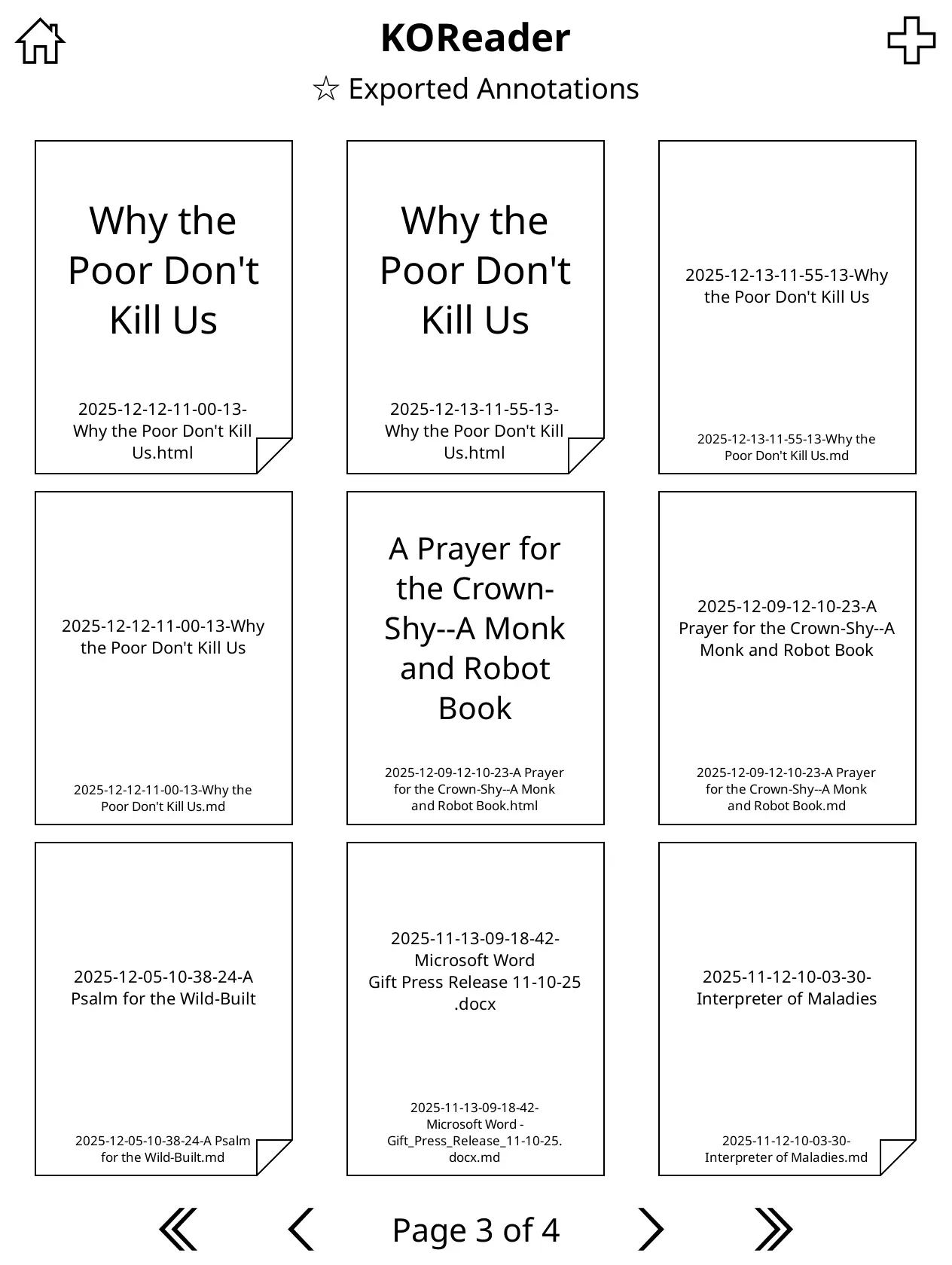
Besides material for later work, reviewing these highlights and notes right after finishing the book also reveals some interesting patterns.
Engaging this deeply with books do not burn me out though. Neither does checking HackerNews / Google News - sometimes for the fourth time in the day. Although that does waste a lot of my time. In fact, I think I’m getting better at being more mindful about which articles I read on HN, and I usually don’t go there more than once a day. For some long threads, I now throw them at AI to quickly summarize the thread — not the article. Google News also remains once or twice a day, but doesn’t consume more than 20 minutes at the higher end. Hacker News overall takes about 30–60 minutes, I suppose.
Those detours and rabbit-holes - they keep happening. Even though I’ve been trying to be more mindful. These days I’ve been saving interesting pieces I find on such detours to pursue later - as a note to myself on Signal or increasingly, using my own web-extension I built for this. This collected list has become yet another source I try to get on top of weekly.
That leaves tech newsletters and Substack. The pattern here keeps oscillating between daily skimming of all that is new across my feed and accumulated deep dives every week or two.
This newsletter and feed is what burns me out the most. I suppose, that’s because it is endless and aimless. I am not specifically chasing anything and there is no clear definition of done. That can get tiring.
The infrastructure trap
These days, I’ve even been letting some old editions just fall away unread. I used to have a problem with that, like leaving an email unread. But I’m getting used to it, at least for newsletters.
Substack works the same way. The two or three I try to keep up with get treated like newsletters — either same-day or accumulated, then powered through in one sitting, depending on the phase. The others I want to engage with meaningfully, but I often don’t have the time or capacity, sometimes both. Occasionally I’ll binge-read through someone’s recent 10–12 posts in a single session, like I did a few days back with Same Here by @shrutisoumya .
But there’s this feeling that I am missing out interacting with a bunch of genuine people and their ideas that resonate a lot. Because by the end of it, I don’t have the energy to engage meaningfully; and before I know it, the next cycle of new posts has already begun the next day.
Tuğba Avci suggests following a ‘slow media’ approach - the idea that you can create more than you consume, by staying in genuine contact with what you’re reading. I recognize myself in it. I do create a lot: notes, drafts, articles, tools for organizing all of the above. The instinct is there. But I’ve also learned to watch that instinct, because building infrastructure around reading can become its own form of avoidance.
I found myself nodding along in familiarity to a lot of those suggestions Tuğba offers. When it truly works, the pattern for me has been: I’m reading toward something. A question, a project, a piece I’m already writing. The material has somewhere to go.
But absent that, it is just an endless hamster-wheel.
Or maybe infrastructure can help…
One of the purposes for reading well for me is to meet more interesting people to engage with. And that’s not been happening with the lack of energy to engage with that endless feed.
At the risk of falling down my familiar rabbit-hole of creating infrastructure instead of actually taking action, I wonder if there can be a system that would help me engage better with people and their ideas. It cannot be truly at scale if I want to still be myself, and not faking “engagement” via some sort of AI. The system would surface just the 3-4 pieces which would truly resonate with me. And it would need to be better than Substack’s feed which is endless and tends to get stuck in single tracks, over-fitting to my most recent engagements.
The payoff seems good enough to give it a try.
Where I actually am
Current state: Cialdini getting 10-15 minutes a day. Not really chasing. Newsletters lapsing unread, which has started to feel okay rather than some sort of personal failure. The six streams are still running, but I dip in now and then instead of trying to dam it all up.
Tuğba’s “slow media” framing is appealing but designed for someone with one stream and time to be deliberate about all of it. I’m not that person right now. Although I still have noted her idea of trying to respond to one medium through another. The more useful question for me right now isn’t how to consume more slowly. It’s whether what I’m consuming is going anywhere. And whether I am engaging with just the content or also the people behind them.
Looking forward to see how it shapes up for me.